


In Greenland, thousands of Inuit women are now set to receive financial compensation due to a long-standing Danish birth-control initiative that forced the implantation of intrauterine devices (IUDs). This development has sparked hope among Inuit women in Canada, who experienced similar injustices, for a formal apology from their federal government.
Recently, the Danish government enacted legislation to facilitate this compensation, following an apology from the prime minister last year regarding the controversial birth-control program.
As reported by Reuters, a joint investigation conducted by Greenland and Denmark in 2025 revealed that between 1966 and 1991, around 4,000 Greenlandic women and girls, some as young as 12, were subjected to forced sterilizations, often without their informed consent.
Naaja Nathanielsen, a member of the Greenlandic parliament representing Denmark, emphasized that the repercussions of this historical period continue to resonate among women in the nation today.
“This has caused immense trauma,” she remarked. “Currently, many women opt for abortions rather than exploring other contraceptive methods… It has influenced our communities and our lives significantly, affecting not only those directly impacted but also subsequent generations.”
The joint report indicated that the Danish government aimed to utilize this practice to decrease birth rates and limit family sizes within the territory.
Women who received IUDs through this initiative are now qualified for a one-time compensation payment of approximately $64,000 CAD. Nevertheless, several politicians from Greenland argue that this compensation has come too late.
“The apology was issued over a year ago,” stated Qarsoq Høegh-Dam, another member of the Danish parliament from Greenland. “Can you imagine how many individuals have passed away since that apology without receiving any compensation? We could not afford to wait any longer.”
Common experiences in Canada
The recent legislation from the Danish government is instilling hope in Canada that their federal government might pursue a similar path.
For many years, numerous Indigenous women across Canada have undergone forced and coercive sterilization. Unlike in Greenland, these practices have persisted beyond the 1990s.
A 2022 report from the Université du Québec en Abitibi-Témiscaminque (UQAT) documented approximately 22 instances of forced sterilization in the province between 1980 and 2019.
A 2021 Senate report concerning forced and coerced sterilization in Canada indicated that eugenics laws and governmental policies intentionally aimed to lower birth rates in Indigenous populations.
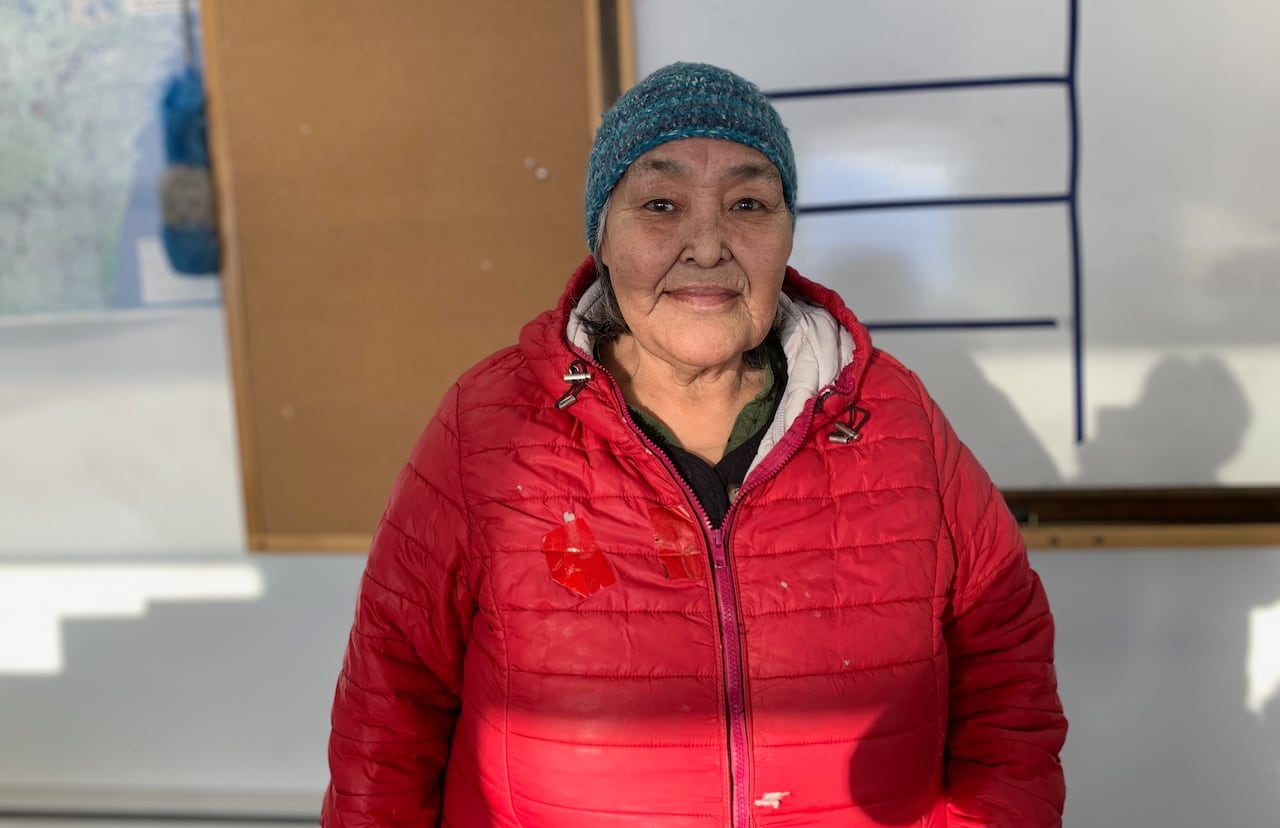
Cecilia Papak stated that following the birth of her daughter, doctors warned her that having more children could jeopardize her life and prevent her from seeing them grow up and eventually have families of their own. (Selma Eccles/CBC)
Cecilia Papak, an Inuk woman residing in Rankin Inlet, was among those coerced into sterilization after being advised by doctors in the late 1970s that she required a hysterectomy.
“I was extremely disheartened by the government’s coercion of individuals who weren’t deemed [healthy enough] to bear children,” Papak reflected. “It felt like an ultimatum—that I had to choose between living longer or continuing to have children. That was frightening. Hence, I felt I had no option but to agree to the surgery to prevent further pregnancies.”
According to Papak, had she not been coerced, she would likely have had more children.
Learning from each other’s histories
The Canadian government has yet to deliver a formal apology regarding the forced and coerced sterilization of Indigenous women. Nonetheless, Papak remains hopeful that the recent actions taken by the Danish government will motivate Ottawa to follow suit with an apology and compensation.
To this date, numerous class-action lawsuits have been initiated in Canada, including at least four against the federal government, addressing this issue.
In June, the Canadian government amended the criminal code to include forced and coerced sterilization as a crime.
-
Approximately 30 Atikamekw women step forward in Quebec class action alleging forced sterilizations
-
‘They had no right’: Inuit women share their experiences of forced sterilization past and present
Høegh-Dam believes that, given the shared history of forced and coerced sterilization in both Greenland and Canada, it is vital for both nations to collaborate and learn from one another to effectively address these issues moving forward.
“My recommendation is to learn from each other’s experiences and maintain open lines of communication, as this is a mutual struggle and a reality that has occurred globally,” she remarked.