

Relatives of Canadian military personnel interred in Gaza are urging the government to take more action to safeguard their family members’ final resting places. They are advocating for the repatriation of their loved ones — the last Canadian soldiers laid to rest abroad — from a cemetery in Gaza City that has endured repeated damage by the Israel Defense Forces.
The Gaza War Cemetery, located in the Tuffah district of Gaza City, is the burial site for twenty-two Canadians who perished during the UN’s inaugural large-scale peacekeeping mission initiated post the Israeli incursion into Egypt in 1956.
A review of aerial images conducted by CBC’s visual investigations team reveals a pattern of destruction at the hands of the IDF, including the obliteration of headstones, creation of berms using heavy machinery, positioning of tanks and armored vehicles, and detonation of explosives leading to a section of the Canadian peacekeeper plot being blasted into the air.
Siblings of two individuals interred in the affected area, Paul Picard from Quebec and Adriaan Bons from Ontario, shared their distress with CBC News regarding the condition of their brothers’ gravesites.
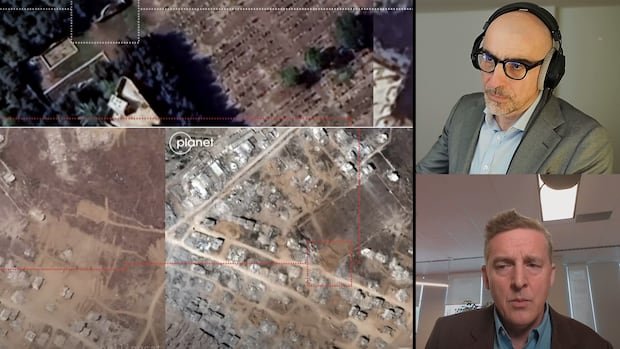
Investigations by CBC News have confirmed the extensive damage inflicted by the IDF on the Gaza War Cemetery, where 22 Canadian soldiers were laid to rest. For The National, CBC’s Evan Dyer delves into the evidence and discusses the impact on families affected.
After observing aerial images depicting the site before and after the destruction, Lia Bons remarked, “It’s like there’s no headstones anymore. It just looks like dirt, gravel, sand. There’s nothing standing even of the surrounding homes.”
Bons expressed relief that her parents did not witness the “complete destruction” of their son’s final resting place.
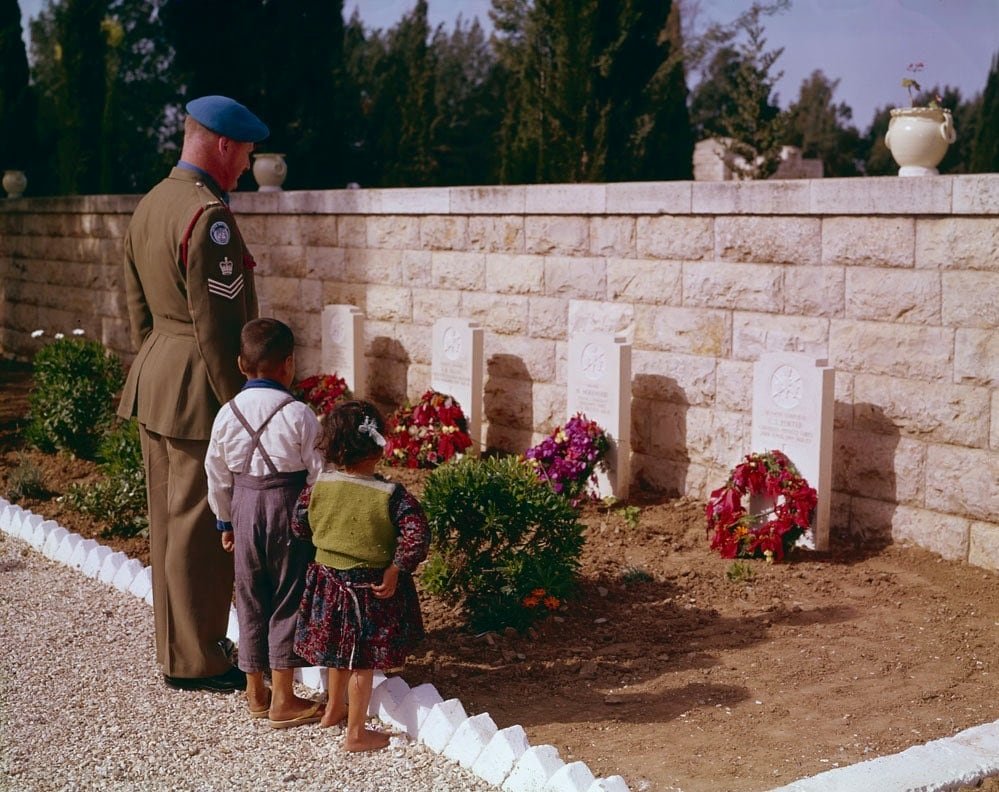
Marguerite Picard expressed her desire to reinter her brother beside their parents, stating, “I’m quite certain that my parents would want my brother to be repatriated. I would put him next to mom and dad and have his name inscribed on the headstone for recognition.”
Contacted by CBC News for comments on the cemetery issue, the IDF referred to an officer from the 401st Brigade Combat Team, who mentioned the unit’s excavation to a depth of 20 to 30 meters to eliminate a tunnel beneath the cemetery. The officer cited combat conditions as the reason for not taking precautions to safeguard the soldiers’ remains, as the plot falls under the administration of the Commonwealth War Graves Commission (CWGC).