

Glenn Deir, a retired journalist residing in St. John’s, shares his experience in this First Person column. For more insights into CBC’s First Person narratives, please refer to the FAQ section.
For a period of five months, I relied on six servings a day of a specific beverage.
This wasn’t your typical six-pack of beer; instead, it was Boost, a meal replacement drink that I turned to post my decision to abstain from alcohol since the beginning of the summer.
My six-pack consisted of Boost, in either vanilla or strawberry flavors, a product that pledged to provide the necessary nutrients for an enhanced quality of life.
My objective was more profound—it was about prolonging my life itself.
Prior to my throat surgery on July 13, where I underwent the removal of my right tonsil, a portion of my tongue’s back, and the connecting tissue due to cancer infiltration, I had my final normal meal—a tenderloin steak.
Following the surgery, the surgeon described my throat as “normalish,” yet unfortunately not sufficiently normal for solid food consumption.
Thus, my sustenance revolved around Boost and pureed meals to sustain me. A blend of meat and vegetables reduced to a slurry isn’t the most appetizing sight. Trying to identify lamb chops or green beans in a pasty spoonful was a challenge.
It’s no surprise that I shed 15 pounds during this period.
Despite my efforts, my diet remained unaltered due to unsuccessful swallow assessments. In August, during a swallow evaluation session facilitated by speech language pathologists Christina and Kerri, I struggled to safely ingest barium-laced liquid and food while being monitored by an X-ray camera.
Unexpectedly, water infiltrated my airway, reaching my vocal cords without inducing a cough. However, it was a dense pudding that obstructed the latter part of the assessment. Despite multiple attempts, the pudding remained lodged at the base of my tongue.
My tongue’s functionality had diminished, the protective flap that prevents food from entering the windpipe didn’t consistently close properly, and my reflexes to clear the throat were subpar, leading to the conclusion that I wasn’t yet prepared for solid foods.
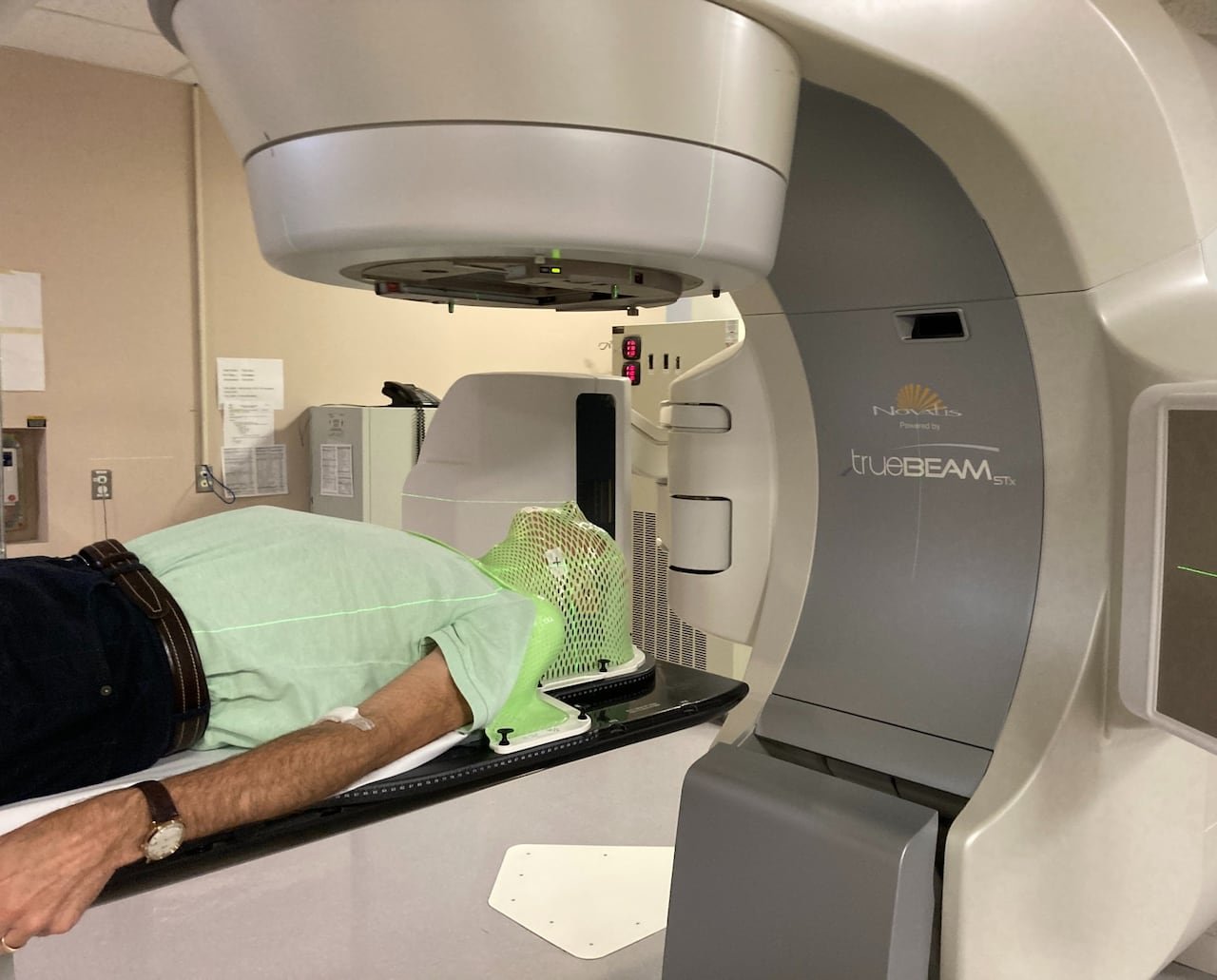
Nevertheless, the medical team at St. Clare’s Hospital in St. John’s remained resolute in their efforts to aid my recovery. However, before retrying the swallow test, I needed to undergo radiation therapy, chemotherapy, and reluctantly cancel a planned moose hunting expedition due to my health condition.
Returning my hunting license and tags, and deferring my participation to the next season required a compassionate plea to the wildlife authorities, which was eloquently articulated by my radiation oncologist, Dr. Brent Tompkins, emphasizing my ongoing recovery and the indispensable support from my wife.
While appreciative of the supportive gesture, I couldn’t help but entertain thoughts of a more impatient response from Dr. Tompkins, envisioning him expressing his frustration at the diversion of his efforts to non-medical issues.</