


Just moments after U.S. President Donald Trump signed an executive order to rename Lake Ontario, a Canadian business was already marketing caps featuring the lake’s original name.
The Ottawa-based company Jackpine launched its baseball caps online mere hours following Trump’s announcement declaring the body of water adjacent to Canada and New York as “Lake America.”
Liam Mooney, the founder of Jackpine, mentioned that the concept for the design came to him the evening prior.
“It was evident he was going to do this to us, so we took action,” Mooney shared with As It Happens guest host Paul Hunter. “The timing was certainly advantageous.”
Jackpine, co-owned by Mooney and his wife Emma Cochrane, also gained attention for the “Canada Is Not For Sale” hats, which became popular last year after Ontario Premier Doug Ford was seen wearing one during public events.
“I feel a sense of duty, almost like I’m a chief promoter for Canada,” Mooney expressed.
“I’m doing everything possible to activate our made-in-Canada supply chains, so if there’s a demand arising from this, we can bring manufacturing back home and leverage the project to boost our country’s industrial base.”
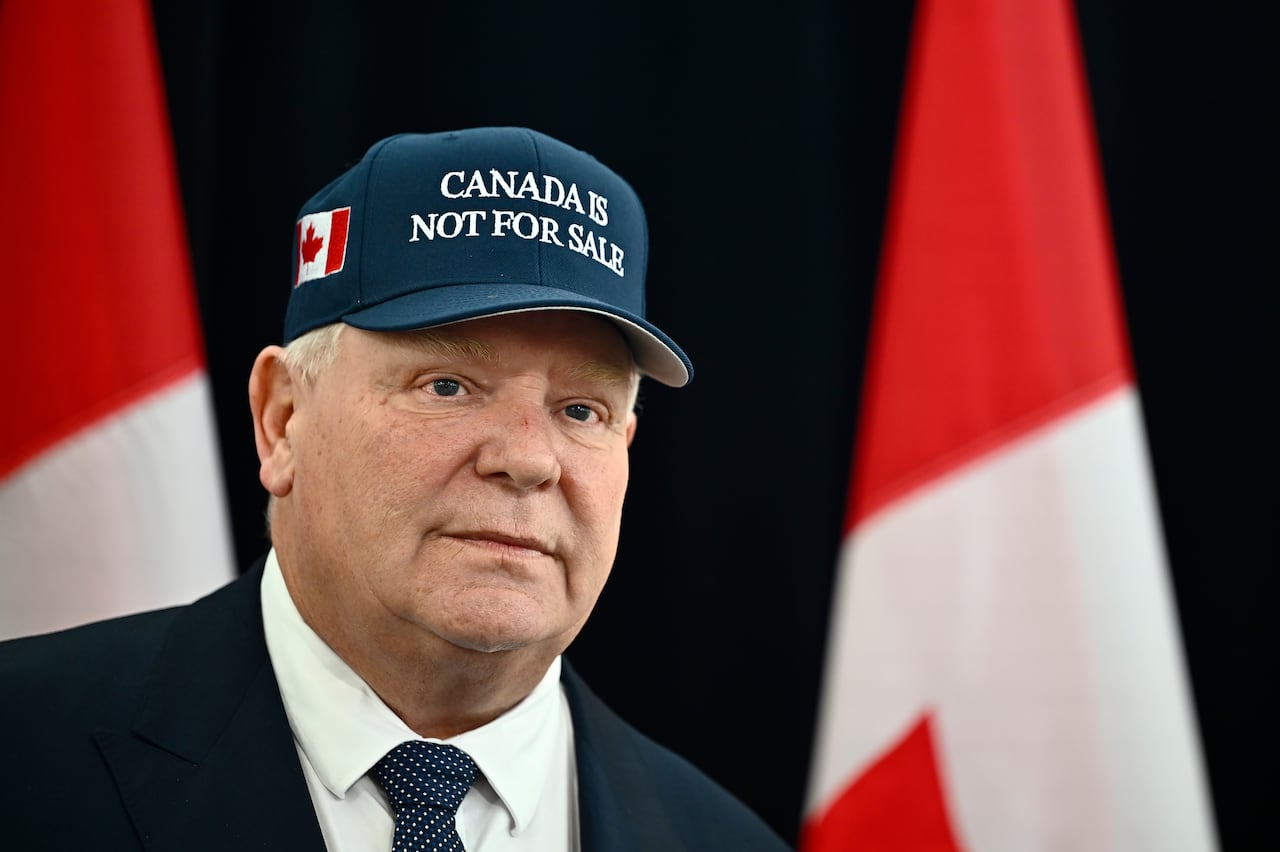
Ontario Premier Doug Ford wearing a ‘Canada Is Not For Sale’ hat as he arrives for a first ministers meeting in Ottawa in January 2025. (Justin Tang/The Canadian Press)
Trump’s order, which alters the name of the Great Lake on U.S. maps, follows a breakdown in trade negotiations between Canada and the U.S. over the previous weekend.
The Trump administration has imposed 50 percent tariffs on a wide range of Canadian products, leading Canada to respond similarly.
Canadians have strongly opposed the executive order.
Prime Minister Mark Carney stated on social media that the name Ontario derives from the Wendat term Ontari’io, meaning “the lake is beautiful, the lake is big,” emphasizing that it predates both the Confederation of Canada and the U.S. Declaration of Independence.
Wendat Nation Grand Chief Pierre Picard also released a statement accusing Trump of attempting to “erase” the history of the nation.
U.S. political analyst Charlie Sykes remarked on CBC Radio’s Day 6 that this action demonstrates Trump’s lack of seriousness as a leader.
“He aims to present himself as a grand global leader, likening himself to historical figures like Caesars and Napoleons. Yet, what is he doing? He’s idly tweeting about renaming lakes,” Sykes commented.
“A clown wielding a flamethrower is still a clown, even with a flamethrower.”
Profiting from patriotism?
Mooney noted that as soon as Jackpine advertised the hat online, orders began pouring in.
“It’s been an incredible day, with a tremendous response,” he said. “Canadians seem eager to find ways to express their patriotism right now.”
However, he mentioned that their clientele extends beyond Canadian borders.
“We’re receiving orders from Paris, Tokyo, London, and Berlin,” he shared. “People around the globe are showing their solidarity with Canada.”
-
‘Lake America’? Trump’s ‘utterly ridiculous’ renaming met with laughter in Kingston
-
Despite Trump’s renaming of Lake Ontario, Great Lakes endure as symbol of U.S.-Canada collaboration
Jackpine is not the only Canadian business managing to benefit from the trade conflict that threatens to disrupt numerous sectors.
In 2025, “Elbows Up” apparel saw soaring sales from Canadian retailers, such as Timeless Memories in Yarmouth, N.S., and Toronto’s Shop Love Collective.
The term, referencing the late hockey player Gordie Howe’s defensive technique, became a national rallying cry last spring as Trump made repeated jokes and threats about annexing Canada as a 51st state.
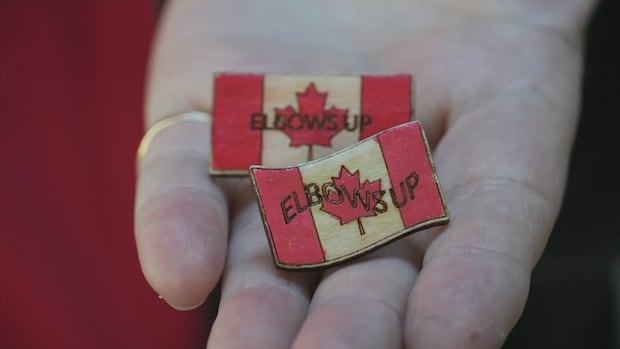
Many Canadians are re-thinking their relationship with the United States as U.S. President Donald Trump levies tariffs and threatens to make Canada the 51st state. Windsorite Mary Gilbeault is making hundreds of ‘Elbows Up’ pins to share her national pride. She speaks with CBC Windsor Morning host Amy Dodge.
When asked if marketing the Lake Ontario hats could be perceived as a cynical attempt to profit from a difficult situation, Mooney emphasized that his motivation stems from patriotism rather than financial gain.
“When individuals seek a way to articulate their feelings, to distill complex ideas into a straightforward message, there are avenues for doing so. Fortunately, we have had the opportunity to be involved in moments where we have successfully achieved that,” he explained.
“And thankfully, it has been beneficial for Canada. We have invested millions in the Canadian textile sector and supported Canadian workers.”