

During a visit to Donald Trump’s Turnberry golf resort in Scotland last year, European Union head Ursula von der Leyen assured Europeans that agreeing to a blanket 15 per cent U.S. tariff on EU exports would bring “predictability and stability” to the continent.
However, some critics now view the trade deal as a one-sided surrender that has led to a continuous cycle of American economic pressure.
The initial move by the U.S. to reclassify certain European industrial goods for higher tariffs was followed by a new dispute over Europe’s attempt to enforce a digital services tax on U.S. tech giants, reminiscent of Washington’s efforts to dictate tax terms to Ottawa.
Shortly after the European Parliament ratified the Turnberry deal, Trump took to Truth Social, threatening to impose 100 per cent tariffs on any European nation that implements or expands tech taxes, challenging European resistance to his demands.
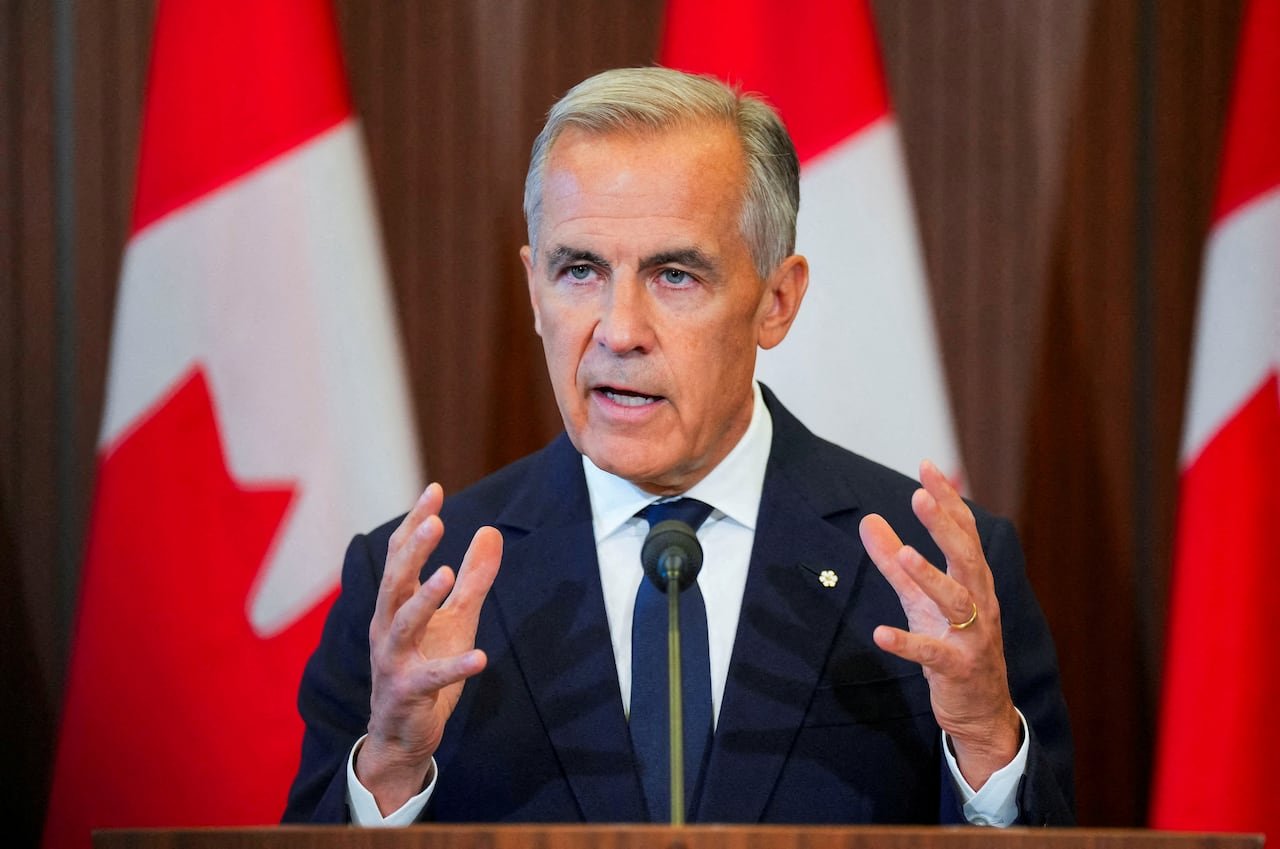
As European lawmakers stand firm against Trump’s pressure, some see Mark Carney’s exit from the U.S. trade negotiations not as a risky move but as a lesson on confronting a bully.
Former French ambassador to the U.S. Gerard Araud suggested that “Canada should lead the way for the EU: with Trump, only firmness pays off.”
German parliamentarian Bernd Lange, who chairs the EU’s trade committee, emphasized the importance of democratic values and cooperation in resisting coercion, stating, “We stand by Canada’s side.”
In a similar sentiment, former Swedish Prime Minister Carl Bildt highlighted the examples of Canada, China, and Brazil in standing up to the United States in trade talks, suggesting a possible discussion within the EU and Japan on their approach to dealing with the U.S.
Subdued Endorsement
Currently, a discreet approach seems to be the prevailing strategy.
Although few European leaders publicly defend Carney in the trade dispute to avoid provoking Trump, behind closed doors, Canada’s strategy is seen as admirable.
Observers note that Canada’s willingness to walk away from negotiations serves as a valuable example for Europeans, indicating that standing firm and increasing pressure on Washington could lead to better outcomes.

Europe has been reluctant to take a strong stance against Trump in trade matters, reserving absolute red lines for territorial issues.
Trump’s attempts to coerce Denmark into relinquishing control of Greenland triggered widespread condemnation in the EU, diplomatic isolation for the U.S., and a modest military response from Denmark and Europe.
Only when Trump’s annexation threat jeopardized the NATO alliance did he slightly backtrack, considering a compromise for developing Greenland’s resources.
While territorial disputes sparked European unity, trade conflicts have not elicited the same level of passion across the continent.