


Prime Minister Mark Carney has pledged additional funding for early detection and warning systems for wildfires as Ontario experiences its most severe wildfire season to date.
During his visit to Thunder Bay, Ont., on Thursday to unveil a significant investment in Via Rail, CBC News inquired about his strategy regarding wildfires.
“What else can we do? We have made substantial investments and plan to make more in the areas of early detection and warning,” Carney stated.
This year is being characterized as the worst wildfire season in Ontario’s history, with the northwestern region being the most severely impacted. At the height of the wildfire crisis, over 2,800 individuals were displaced, affecting more than a dozen communities.
Wildfires this summer devastated two First Nation communities in northwestern Ontario: the Namaygoosisagagun First Nation (also known as Collins First Nation) and Whitewater Lake First Nation.
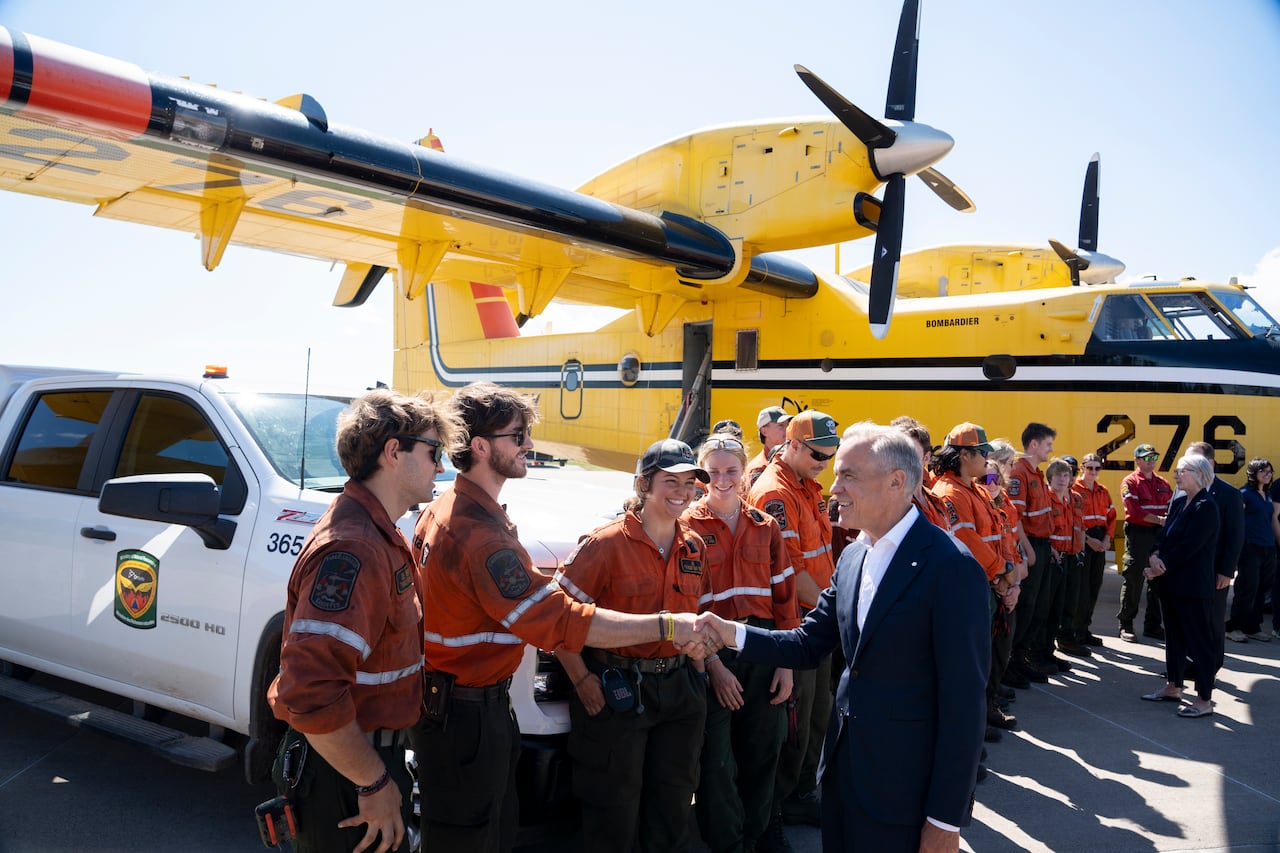
Ontario wildland firefighters welcome Prime Minister Mark Carney at the Thunder Bay Fire Management Centre in Thunder Bay, Ont., on Thursday. (David Jackson/The Canadian Press)
“We must acknowledge, and we certainly do, that this is the most severe forest fire season in Ontario’s history — but the trends indicate that this record could be surpassed, and we are preparing for that eventuality,” Carney remarked.
He expressed gratitude to those combating the fires, including the Canadian Armed Forces, which aided in the evacuation of Eabametoong First Nation members, along with host communities like Thunder Bay.
“There is more that can be accomplished regarding investments in firefighting resources, aircraft, and other necessary equipment. Additionally, there is a need for collaboration with communities, especially Indigenous ones, focusing on both traditional firefighting techniques and preparation for evacuations as needed,” the Prime Minister added.
Following his announcement at the Alstom train manufacturing facility, Carney toured the Thunder Bay Fire Management Centre to engage with wildland firefighters and learn about their efforts this season.
‘We need much, much tougher climate policies’
Outside the fire management centre, Carney encountered a lone member of Citizens United for a Sustainable Planet, a local environmental advocacy organization.
Paul Berger, the group’s lead organizer, held a sign that read “Carbon Carney: Our Prime Arsonist.”
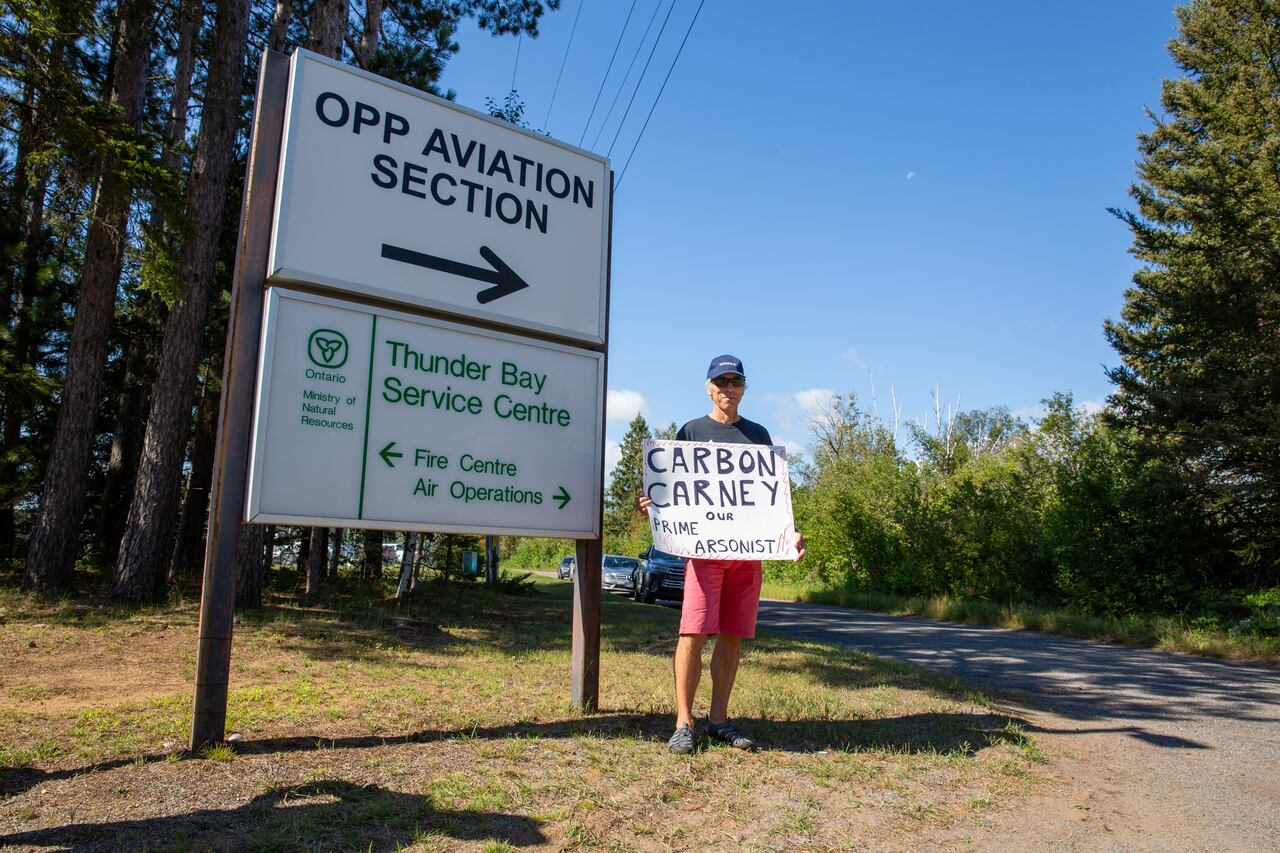
Paul Berger, lead organizer for Citizens United for a Sustainable Planet, stands outside the Thunder Bay Fire Management Centre on Thursday ahead of Prime Minister Mark Carney’s visit, holding a sign that reads “Carbon Carney: Our Prime Arsonist.” (Sarah Law/CBC)
While Berger supported the Prime Minister’s investment in passenger rail services, he criticized government spending on projects that promote fossil fuels, referring to the Canada-Alberta agreement to construct a new oil pipeline to the West Coast.
“Building rail cars to encourage train travel while simultaneously constructing pipelines is like being in a leaky boat and drilling holes in the hull, then using a Dixie cup to bail out water. This approach is insufficient,” Berger remarked.
“We urgently need much stronger climate policies, and it is possible to implement climate strategies that also enhance affordability and quality of life for Canadians.”
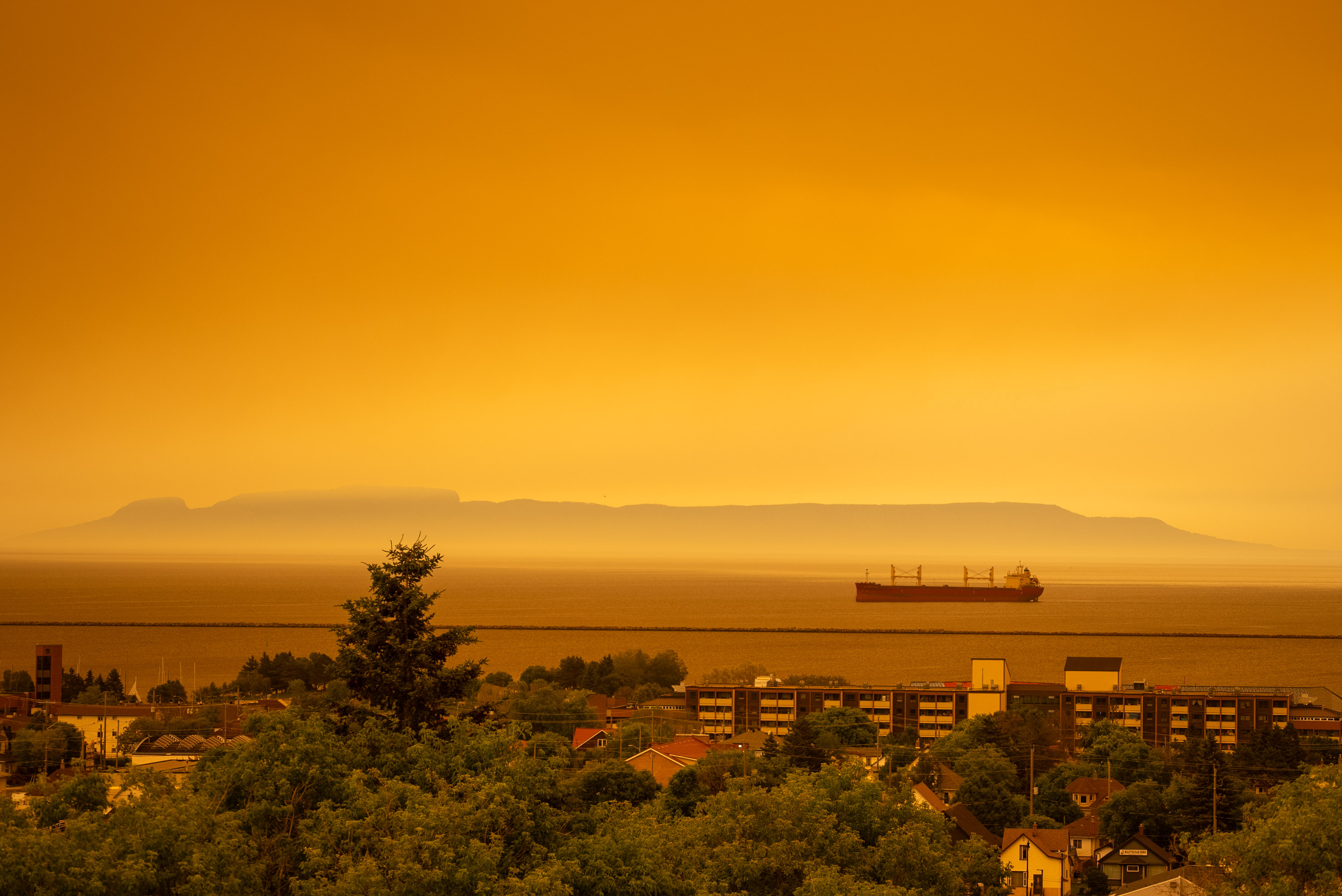
Thunder Bay, Ont., enveloped in smoke from forest fires on July 14, 2026. (Marc Doucette/CBC)
The federal government released a summary of findings from the second edition of Canada’s Changing Climate Report on Thursday, indicating that Canada is expected to warm throughout this century, with predicted temperature increases of 5°C by 2081 to 2100.
“We need to help Canadians realize that climate action is not just a luxury but a necessity, and future generations will not forgive us for engaging in disputes with the states instead of taking meaningful action,” Berger asserted, alluding to the ongoing trade tensions between Canada and the U.S.
“We must pursue climate initiatives alongside other important matters, and we have the capability to do both, but we are currently choosing not to.”
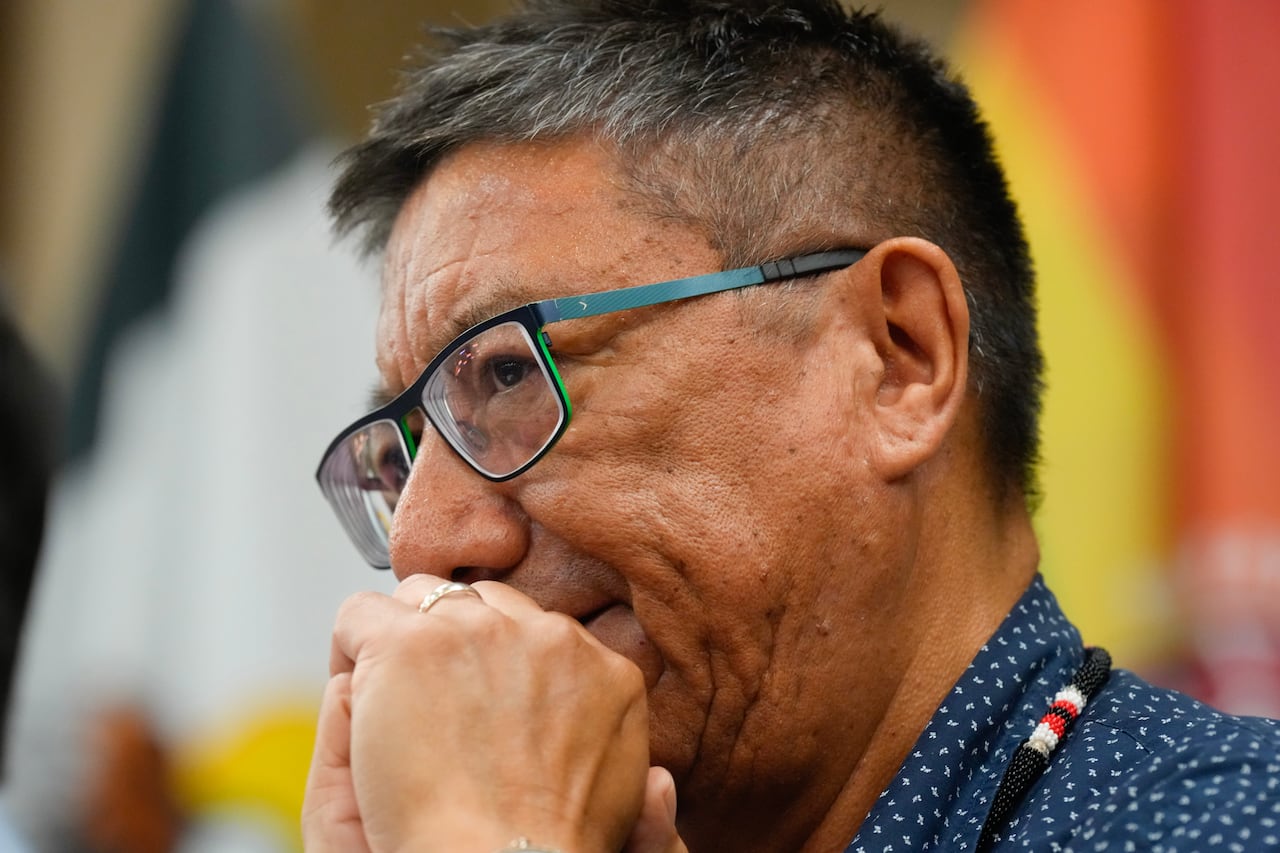
Nishnawbe Aski Nation Grand Chief Alvin Fiddler at a news conference in Thunder Bay, Ont. on July 21, 2026. (Chris Young/The Canadian Press)
Following Carney’s visit to Thunder Bay, the Nishnawbe Aski Nation (NAN), which represents 49 First Nations in treaties 9 and 5, issued a statement addressing climate change and infrastructure concerns on Thursday.
“Over 30 First Nation communities in northern Ontario lack year-round road access, depending on winter roads that are increasingly jeopardized by climate change. As temperatures rise, the duration of these roads diminishes each year, isolating communities from essential goods, services, and emergency aid they rely on,” the statement highlighted.
“The Prime Minister spoke today about committing to infrastructure that will secure ‘our future.’ However, we see no evidence in his announcements that First Nations will be included in that future,” NAN Grand Chief Alvin Fiddler stated in Thursday’s news release.
“We urge Canada to demonstrate otherwise with the same ambition, urgency, and level of investment.”