

This summer has been marked by heightened tensions in Eastern Europe, with growing concerns that Russia may be gearing up to challenge NATO’s unity by engaging in provocative actions.
Instances of Russian drone intrusions and a missile strike in Poland and Romania since the spring have raised alarms in the region.
Speculation surrounding the unexpected visit of the CIA director to Moscow last week has fueled fears of potential Russian aggression.
The focus of worry among officials in Poland and the Baltic states is not a sudden large-scale military invasion by Russia, but rather the possibility of Moscow carrying out a calculated, limited act of violence to intimidate NATO without triggering a full military response.
In late July, a Russian cruise missile struck Poland’s Lublin province during a significant attack on Ukraine, while multiple drones have also encroached on Polish airspace in recent weeks.
According to a Polish defense expert, the Kremlin seems to believe that undermining NATO is essential for defeating Ukraine, given the challenges faced in the ongoing conflict.

Military and police officers investigate the site where a suspected Russian missile fell in a field near Lublin, Poland, on July 30. (Agencja Wyborcza.pl via REUTERS)
The Russian leadership, recognizing their failure to achieve a decisive victory in Ukraine, is reportedly exploring ways to weaken NATO’s resolve, with a potential escalation in September, before or after Russia’s parliamentary elections.
While there are signs of increased Russian assertiveness, there is no unanimous agreement that President Putin is inclined to initiate a conventional conflict with NATO at present.
There is a strong possibility that Russia will take actions to test NATO’s cohesion and decision-making processes.Kerry Buck, Canada’s former ambassador to NATO
Warnings from the U.S., Poland, and Baltic nations about potential provocations from Russia have become more explicit over the summer, with concerns of possible military actions targeting NATO members.
Recent reports suggest that Russia might be considering provocative moves against NATO even during the ongoing conflict in Ukraine, signaling a notable shift in perceived threats.
Former NATO ambassador Kerry Buck highlighted the current vulnerabilities within the alliance, exacerbated by recent policy changes and uncertainties about the U.S. commitment to collective defense.
While a direct military confrontation with NATO seems unlikely, the prospect of Russia engaging in destabilizing actions remains a cause for concern.
Amid these developments, questions linger about the leadership and response coordination within NATO, particularly in light of potential reluctance from the U.S. to engage actively in alliance activities.
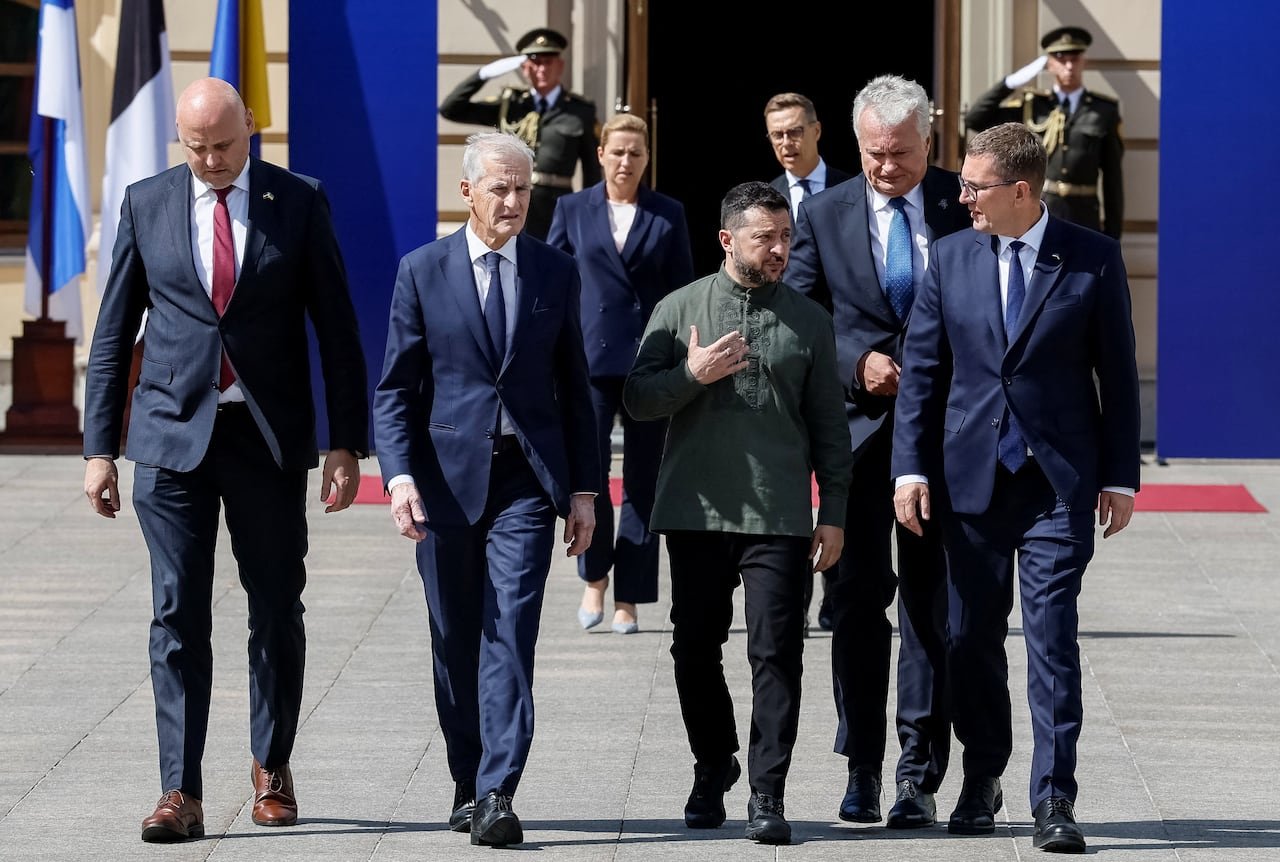
Leaders at a Ukraine-Nordic-Baltic summit in Kyiv on Aug. 23. (Gleb Garanich/Reuters)
Recent intelligence reports have raised concerns about the potential use of Ukrainian drones by Russia in false flag operations against NATO members, further complicating the security landscape.
<