

UPDATE:
- The B.C. Conservation Officer Service announced on August 14 that they have euthanized the mother grizzly bear due to safety concerns after it exhibited signs of being habituated to human food and lost its fear of people.
- The two remaining yearlings have been relocated to an undisclosed location for continued monitoring.
- CBC News was informed that no one from the service was available for an interview.
A demonstration was held in Nelson, B.C., on Thursday to voice opposition to the decision made by the B.C. Conservation Officer Service to put down a young grizzly bear.
This bear belonged to one of the two grizzly families frequently spotted in and around Nelson.
Katie Graves, founder of the Ursa Project Society, described the rally as emotional, with attendees expressing sadness and solidarity.
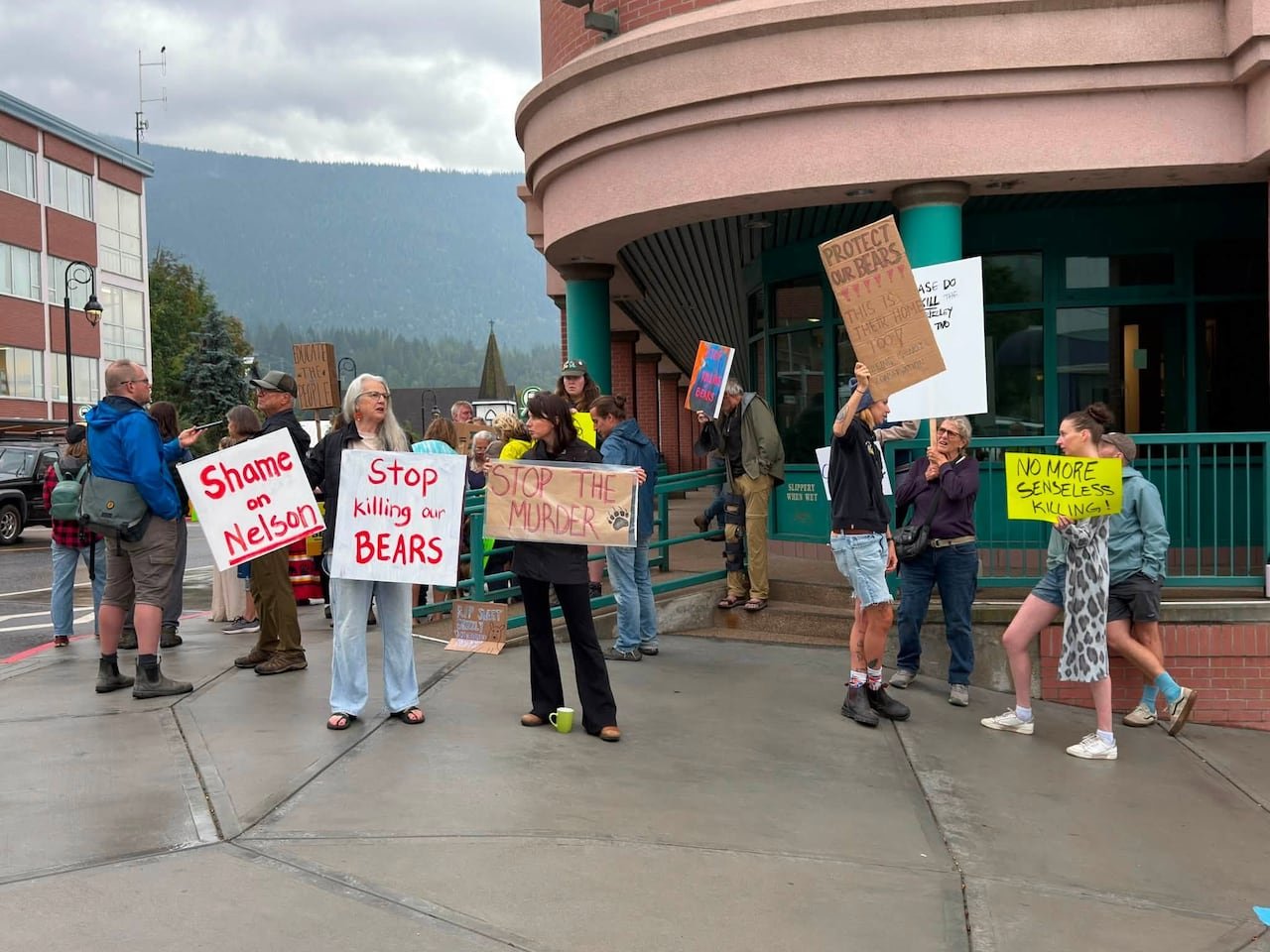
Graves argued that the young grizzly, which had a leg injury or deformity, did not pose a threat and should not have been euthanized.
She highlighted that the bear was active, kept pace with its family, and was able to feed itself.
According to Graves, many bears in the wild with physical challenges lead full lives, and the decision to kill this bear was unnecessary.
In a statement released by the B.C. Conservation Officer Service (BCCOS) on Wednesday, it was mentioned that the bear’s age, injuries, and history of conflicts made rehabilitation or relocation unfeasible. Specific details about the conflicts were not provided.
The BCCOS expressed regret over the situation, stating that decisions to euthanize bears are never taken lightly.
Graves recounted that the mother bear had previously been relocated after bringing cubs to the area in 2023 but returned shortly after.
The Conservation Officer Service has not provided updates on the status of the other grizzlies — a sow and two yearlings — but assured that any captured bears would be assessed for further action.
The incident has generated significant discussion on local Facebook groups, with most comments criticizing the decision to euthanize the grizzly bear.
While acknowledging the officers’ duty to protect the public, many community members emphasized the need for better waste management practices to prevent bear-human conflicts.
Wildlife biologist Clayton Lamb emphasized the importance of implementing stronger policies to reduce attractants and prevent further bear fatalities.
Lamb stressed the challenges of rehabilitating habituated bears, noting that prevention of conflicts through proper waste management is essential.
The City of Nelson stated its commitment to wildlife preservation by implementing measures such as bear-resistant garbage cans and educational programs.
The city’s bylaw services are actively enforcing regulations on waste management and wildlife attractants to maintain a safe environment for both residents and bears.